As the World Baseball Classic 2026 is about to begin tomorrow, France is watching this international tournament from afar. Behind the marginality of baseball in the Hexagone, however, there are signs that this event could, in the long run, concern us much more.
For now, it’s hard to get excited. No French team qualified, no French players on other teams, only one French umpire on site (Serge Makouchetchev in Miami) and match schedules that require getting up in the middle of the night. In short, the disconnection is almost total.
However, every two years, the global baseball season begins with this competition organized by Major League Baseball (MLB). Today, the WBC has become the most-watched tournament in the baseball world, eclipsing the former ‘Premier’ tournament of the world federation (WBSC).
In 2022 and 2023, France had been excited about the presence of Bruce Bochy to coach the Blues in the qualifying phases. The flexible rules then allowed ‘not really French’ players, but present on the territory for long enough, to play. Qualification was not obtained, but a start of emotion had been felt. For 2026, even this step is missing: no ticket for the qualifying phase.
So what’s left for us? The spectacle, simply. A competition bringing together the world’s baseball elite, nighttime matches, and moments that will be written into history. Who could forget the last ‘at bat’ of the 2023 final, when Ohtani faced Trout in a Japan-USA duel, and the American’s swing and miss offered the victory to Japan, a country that has always sought to challenge the United States in their king sport?

For 2026, the predictions are obvious: Japan and the USA should again dispute the final, with two outsiders capable of upsetting the hierarchy: the Dominican Republic and, to a lesser extent, Venezuela.
But the WBC is not immune to criticism: paid broadcasting on Netflix, visa refusals for some Cuban players, players retained by their franchises (Skubal for Team USA limited to one match, Matsui for Japan, Bellinger for the USA…). Even the five European teams engaged in the qualifying phases (England, Italy, Czech Republic, Netherlands, Israel) struggle to make themselves heard in the face of communication focused on North American and Asian audiences.
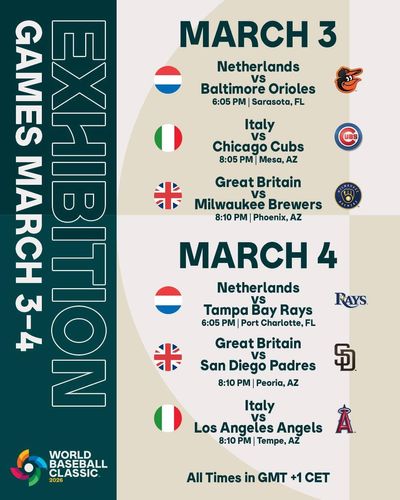
It’s also interesting to see, on March 3 and 4, the national teams meet in the context of the MLB teams’ spring training. Panama was dominated 11-1 by the Yankees, the Netherlands won against the Orioles, the Blue Jays won 10-7 against the Blue Jays, Israel scored only one point against the Marlins, the Mets dominated Nicaragua 6-3. Italy beat the Cubs 9-4 and the English won 7-3 against the Brewers.
Despite everything, this competition remains fascinating. It opposes the ultra-professionalized American model, Japanese collective rigor, and Caribbean passion, offering a true mix of cultures. Like the Olympics, it’s also a field of diplomacy: Cuba defies the American administration with visa issues, and binational players sometimes have to choose their side.
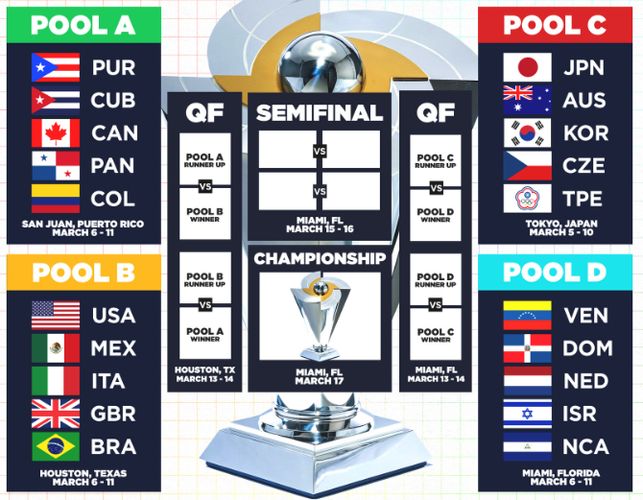
The format itself is captivating: short tournament, direct elimination after the pools, like football. Each match counts, each swing can become historic. Ohtani, who impressed with his pitching in 2023, could this year mark minds with his bat, why not with a decisive grand slam in the last at bat of a suspenseful final.
In conclusion, the WBC 2026 concerns us little for now, due to the lack of French presence and massive media interest. But tomorrow, with digital media, the emergence of French players abroad, and the fascination with global stars, the World Baseball Classic could well become an event followed with passion by the French public, like the Football World Cup or the Olympics.
Tournament from March 5 to 17, four qualifying pools. Finals on March 17 in Miami. Possible broadcasts on Bein Sport.