
With fifteen days to go before the play ball in France, the smell of dirt is starting to fill the air. The Division 1 and Division 2 baseball and softball championships are about to resume. Meanwhile, elsewhere in the baseball world, the stars are quietly warming up: the World Baseball Classic is in full swing in its group stage, while the Japanese and American leagues are stretching their arms in the mild spring warmth before the resumption of Major League Baseball.
In short, the global baseball machine is getting into motion. And at Baseball TV France, before diving headfirst into box scores and standings, we decided to take a moment to look at a sometimes discreet, sometimes omnipresent, and often misunderstood character: the captain.
In the perfect world of baseball
In a perfectly organized universe – the one imagined in sports management manuals – a baseball team functions like a small business.
At the top of the organizational chart, there is the president, guaranteeing the administrative, financial, and legal structure. Alongside, the manager, boss of the field and conductor of the game.
The president talks about budgets, licenses, infrastructure, and strategy.
The manager, on the other hand, turns all this into sports decisions: lineups, pitcher rotations, game strategy.
Under his orders are the specialized coaches: pitching coach, catcher coach, outfield coach… and of course the players.
And among them, a somewhat particular character: the captain.
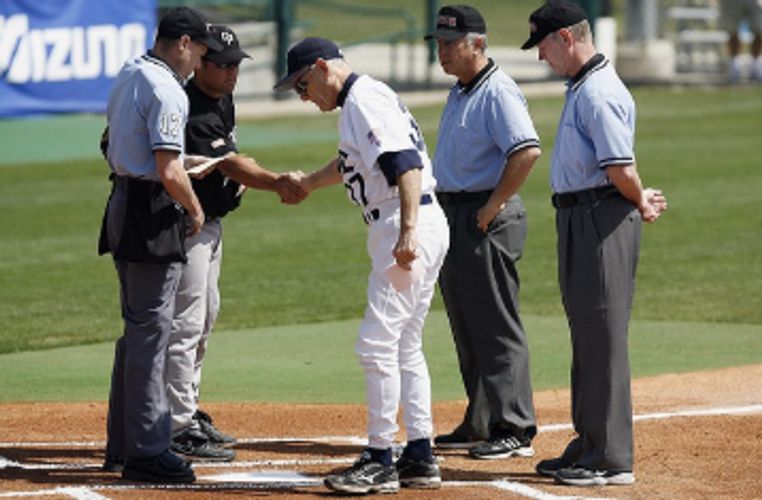
The captain, an eye in the heart of the game
The captain is a player like the others… but not quite.
He is designated by the manager – sometimes elected by the players – and draws his legitimacy from his experience, charisma, or ability to speak louder than everyone else in the dugout.
His mission?
To be the manager’s relay on the field.
Because while the manager observes the game from the outside – sometimes sitting in the dugout with a cold coffee and a crumpled lineup sheet – the captain, on the other hand, lives the game from the inside.
One sees the big picture.
The other feels the tempo of the game.
When communication works, it’s a formidable duo.
Welcome to the reality of amateur baseball
So far, so good.
But this beautiful, well-oiled machine belongs mostly to the professional world. In amateur baseball – and particularly in France – things sometimes take… a more creative turn.
Let’s put it another way: the organizational chart sometimes becomes an exercise in improvisation.

Incongruity #1: the manager who puts the cleats back on
In theory, the manager is a former player who has converted, comfortably installed in retirement from the diamond.
In practice… he sometimes puts the cleats back on.
Out of necessity, due to a lack of personnel, or to comply with certain rules like the JFL quotas.
We’ve seen Keino Perez, manager of Rouen Huskies, climb onto the mound to pitch a few innings. More recently, Patrice Briones has also returned to service.
Conclusion: even in Division 1, baseball sometimes remains a sport where the manager keeps his glove in the bag… just in case.
Incongruity #2: manager and captain… the same person
Here, we enter a particularly sporting configuration.
Imagine:
The manager has to analyze the game, manage substitutions, anticipate strategy… all while playing on the field himself.
In other words: managing the team while trying to hit a ball at 140 km/h.
Certain teams have tried the experience – in Montpellier, La Rochelle, or Savigny, for example.
Result?
Let’s just say that over a full season, the formula often shows its limits.

Incongruity #3: when the captain becomes the real boss
Another classic scenario: the captain is so charismatic that he ends up eclipsing the manager.
In the dugout, discussions seem balanced.
But when it’s time to make a decision… the captain has the final word.
We’ve already seen this type of configuration in certain clubs like Montigny, Sénart, or Paris Université Club.
The manager officially directs.
The captain unofficially directs.
And sometimes, guess who is the most listened to.
Incongruity #4: three roles for one person
This is probably the most spectacular case.
In certain situations, the manager, the captain, and the player involved in a dispute with the umpire… are the same person.
Imagine the scene:
- the player disputes a decision,
- the captain intervenes,
- the manager comes to discuss with the umpire…
…and it’s always the same person.
Frequent result: ejection.
And a team that suddenly finds itself without a manager, without a captain… and often without its best player.
This can be understood in regional or Division 3 levels.
But we’ve also seen it at the highest level in France.
The real question: authority
Ultimately, all this boils down to a simple question: authority.
The manager draws his legitimacy from the president or the club’s board.
The captain, on the other hand, draws his from the players.
Then, each must convince those who did not appoint them.
The captain must seduce the staff.
The manager must earn the respect of the locker room.
And in baseball, there is a tacit rule:
a respected manager is often a former great player.
A nearly universal dogma:
« A great manager was a great player. »
This is not always true… but it’s often what players think.
And sometimes… cliques
Another well-known phenomenon: cliques in the locker room.
Two groups form, each with its leader.
And suddenly, the team finds itself with two unofficial captains.
If the manager openly leans towards one of the camps, the situation can quickly become explosive.
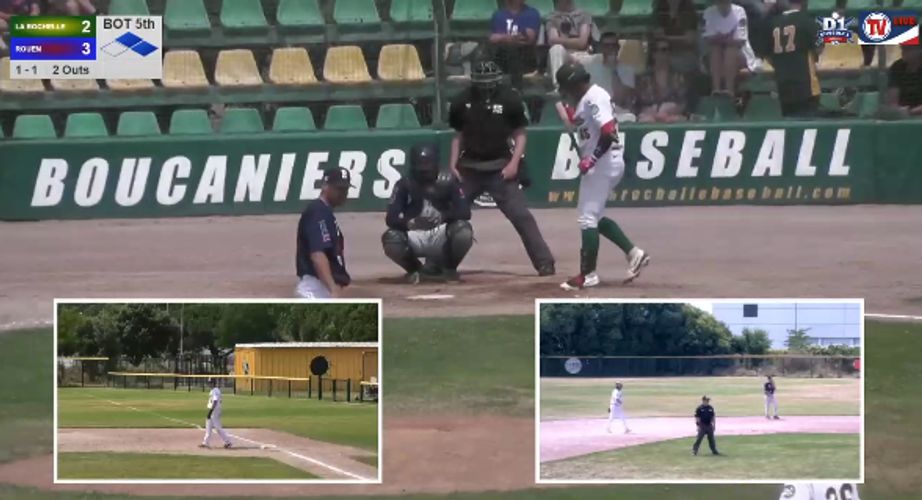
A particularity of baseball
Unlike football or rugby, baseball can function without a captain.
The manager and his staff can theoretically manage everything.
Because ultimately:
- the manager directs and decides
- the captain inspires and unites
But these four functions can sometimes be concentrated in a single role: that of the manager.
Yet, the confusion persists
Lack of resources will continue to force certain teams to function this season with:
- no captain,
- a captain-manager,
- or an omnipresent captain.
And sometimes… all at the same time.
Morality
This article is not intended to catalog the managerial catastrophes of French baseball.
But simply to remind a simple truth:
Teams that last are often those where roles are clear and occupied by legitimate people.
Removing a role or appointing someone who doesn’t have consensus can work…
but rarely for very long.
And you?
⚾ And you?
Have you ever encountered other management situations that are at least… original in French baseball?


