As we look ahead to a season that promises to be intense and full of pivotal moments, we chose to catch up with one of France’s most promising baseball prospects in the United States: Mathias Lacombe.
Now based across the Atlantic and on the rise, the young pitcher is already establishing himself as a credible figure at the highest level. Between a lucid look at the path he’s taken and affirmed ambition for the challenges ahead, he shares with us an analysis marked by maturity, demand, and determination. A conversation that confirms all the potential of a talent in full construction — and hints at even more remarkable progress in the months to come.
BTVF: Looking back over the last three years, what are the highlights, key victories, and milestones that have really marked your journey?
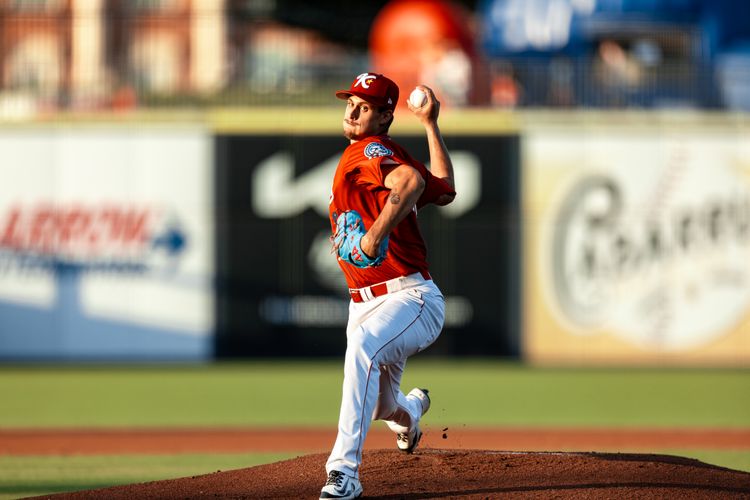
Over the past few years, I’ve worked a lot in the gym to get stronger and avoid falling back into the injury cycle. On the baseball side, I’ve added a ‘cutter’ and a ‘fastball’ to my arsenal to be able to eliminate left-handed hitters more easily, which was a problem for me. All this allowed me to show the White Sox that I was a good pitcher and that I was healthy, and I was able to get this promotion to Kannapolis in July 2025.

BTVF: 2025 was a pivotal season for you. What performances are you most proud of, and what changed in your game that year?
2025 was a very important season; I had to show that I could pitch and be in shape for the season and leave my injuries in the past. I focused on developing my cutter and fastball, and I also worked a lot on my splitter, with which I had trouble throwing strikes.
BTVF: When we dive into your stats at Kannapolis — ERA at 3.04, WHIP at 1.11 — what do they really say about your season? Do you see a confirmation, a breakthrough, or still room for improvement?
I’m happy with myself this season; I reached my goals and pitched well, being dominant. This season, I wasn’t hit much, with few strong contacts and extra-base hits. The only downside was the lack of control at the end of the season. For me, it’s a logical step in my development; coming back from injury, I had to make a big impact and show that I’m a dominant pitcher. Fortunately, I still have a lot of things to improve, and there’s a good margin for progression in terms of control of my effects and pitch sequences.
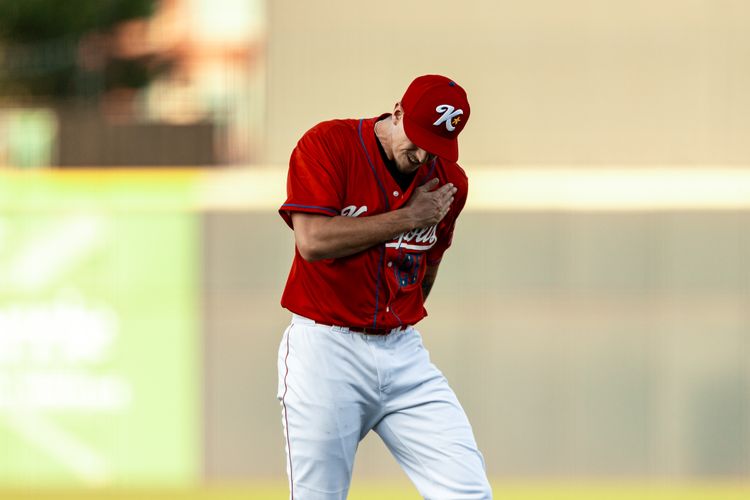
BTVF: New season, new objectives. How do you approach 2026: prioritizing consistency, power, leadership, or moving up a level?
This year will be my first season without a pitch limit. I hope to pitch close to 100 innings. I’ll focus on control, avoid walks as much as possible, and attack each hitter quickly to gain an advantage in every at-bat. I think the power will come without focusing on it because I’ve worked hard this winter to strengthen myself. In the minor leagues, it’s a bit every man for himself, so we can forget about leadership. And then the move up a level depends on my performances, of course, but the decision comes from above, so I’ll focus on my performances and what I can control.
BTVF: Beyond physical work, how do you build your mental game? How do you tame the pressure of tight games and moments when everything can change?
I work with a mental coach who helps me prepare mentally and mobilize for important moments. I have mental keys to focus and be ready. Then I’d say I’ve always been better in important moments with a lot of stress; I manage to turn stress into concentration and a desire to win.

BTVF: Everything seems aligned for you to reach a new level. What’s your method for continuing to progress — technically, physically, mentally — without ever resting on your laurels?
I work enormously on my physical condition to be stronger and last the length of the season because having a good game is easy, but maintaining the highest level all season is the real challenge. And frankly, seeing the draft every year, with 20/30 new players signing, motivates me. We also see a lot of players getting cut during the season because they’re not at the level or for other reasons, and that allows us to stay on our guard and motivated.
BTVF: You’re a Frenchman in a very American universe. How do you experience this daily immersion? Has the current context had an impact, near or far, on your experience there?
It always creates funny moments because of my accent or culture, but it’s always benevolent; I’m happy to be here, and people are more intrigued than anything else. As for the current situation, it doesn’t interest me that much; I already have a lot of things to think about in my career, and I prefer not to waste time and energy listening to politics.